Search POM Topics
-
Crisis
-
General
-
Perioperative Medication Management
-
Investigations
-
Calculators
-
Cardiology
-
Complications
-
Day Surgery
-
Endocine
-
Haematology
-
Infectious Diseases
-
Neurology
-
Paediatrics
-
Pain
-
Respiratory
-
Useful Links
Direct Link to ADS-ANZCA 2022 Perioperative Diabetes Guideline HERE
Pre-Operative HbA1c Targets
- HbA1c should be measured < 3 months (preferably 4-6 weeks) prior to elective surgery.
- Refer to endocrinologist when HbA1c is ≥ 9% or when there is hypoglycaemia unawareness.
- Target HbA1c < 9% prior to elective surgery.
- Patients with HbA1c > 9% have poorer outcomes and the ADS-ANZCA Guidelines recommend delaying elective surgery to obtain better glycaemic control.
- This delay may be 1-2 weeks in urgent surgery settings, or 3 months in less urgent settings.
Screening of Patients Without Known Diabetes
- Up to 30% of patients may have undiagnosed diabetes
- Screen with:
- HbA1c prior to Major Surgery
- random BGL prior to Minor Surgery
- Refer to GP for further management if HbA1c > 6.5% or random BGL > 12mmol/L.
- Perioperative management should proceed as if patient has diabetes
| Planned Surgery | Undiagnosed Diabetic Screening |
| Major | HbA1c |
| Minor | Random BGL |
Perioperative Diabetic Medication Management
Perioperative Diabetic Medication Management1
Oral Antihyglycaemic Medication Management
| Class | Examples | Day Prior to Surgery | Day of Surgery |
| Sulphonylureas |
gliclazide (diamicron) |
Continue as Usual | Withhold |
| Alpha-glucosidase Inhibitors | Acarbose | ||
| DPP-IV Inhibitors |
linagliprin (Trajenta) |
||
| Thiazolidinediones |
rosiglitazone (Avandia) |
||
| Biguanides |
metformin |
||
| SGLT2is |
dapagliflozin (Forxiga) |
Major Surgery / Colonoscopy |
|
| GLP-1 Analogues |
semaglutide (Ozempic) |
Continue as usual Follow 24-hour fasting guideline - clear fluids only for 24 hours prior - water only on DOS - NBM 2 hours pre-op Click HERE to View Patient Information Handout |
|
|
|
|
|---|---|
|
gliclazide (diamicron) glipizide (glucotrol) glimepride (amaryl) glyburide (glynase) |
|
|
|
|
|
|
|
|
acarbose |
|
|
|
|
|
|
|
|
linagliprin (Trajenta) sitagliptin (Januvia) alogliptin (Nesina) saxagliprin (Onglyzna) vildagliptin (Galvus) |
|
|
|
|
|
|
|
|
rosiglitazone (Avandia) pioglitazone (Actos) |
|
|
|
|
|
|
|
|
metformin metformin + sinagliptin (Janumet) |
|
|
|
|
|
|
|
|
dapagliflozin (Forxiga) empagliflozin (Jardiance) Ertugliflozin (Steglatro) dapagliflozin + metformin (Xigduo) |
|
|
|
|
|
Cease 2 days prior + day of surgery last dose day -3 Day Surgery / Gastroscopy Cease Day of Surgery |
|
|
semaglutide (Ozempic) liraglutide (Saxenda) |
|
|
|
|
|
Follow 24-hour fasting guideline - clear fluids only for 24 hours prior - water only on DOS - NBM 2 hours pre-op Click HERE to View Patient Information Handout |
|
SGLT2i: Sodium-glucose cotransporter 2, DPP-IV: Dipeptidyl peptidase IV, GLP-1: glucagon-like peptide
* Major surgery: surgical cases requiring > 1 night of hospitalisation post-operatively
* Minor surgery: all day surgical cases and extended day surgery cases that require 1 night in hospital
Insulin Management
|
|
|
|---|---|
|
Insulin glargine • Lantus • Optisulin • Tuojeo • Semglee Insulin determir • Levemir |
|
|
|
|
|
|
|
|
Basal • Insulin glargine • Insulin detemir Bolus • Ultrarapid: Aspart-FiAsh •Rapid: humalog, novorapid, apidra • Short: actrapid, Humulin R |
|
|
|
|
|
Keep basal dose unchanged |
Omit lunch time dose (fasting) Keep basal and evening meal dose unchanged if eating. |
|
(intermediate + short/rapid) • Novomix 30 • Mixtard 30/70 • Humalog mix 25 |
|
|
|
|
|
Omit any lunchtime dose if not eating Leave the evening meal dose unchanged. |
Omit any lunchtime dose Leave evening dose unchanged if eating. |
|
(ultra-long + rapid) • Ryzodeg 70/30 |
|
|
|
|
|
Give usual morning dose at lunchtime if able to eat by then If patient is on morning or lunchtime only dose, give usual dose with evening meal if not able to eat before then. |
Omit any usual lunchtime doses If usually lunchtime dose only, give usual dose with evening meal, if eating by then If usually takes evening dose, give usual dose with evening meal if eating. |
|
• Humulin NPH • Protaphane |
|
|
|
|
|
50% of the total insulin dose should be given as an Intermediate acting insulin only in the morning Leave evening meal and pre-bed doses unchanged. |
50% of the total insulin dose should be given as an Intermediate acting insulin only in the morning Half the morning rapid-acting insulin can be given with a light breakfast. Leave evening meal and pre-bed doses unchanged. |
| Subcutaneous Insulin Pump | |
| AM List | PM List |
|
OR Use temporary basal rate of 80% usual if: • fasting BGL < 5mmol/L • HbA1c < 58mmol/mol (6.5%) If Autopump mode, set exercise blood glucose target |
Continue basal infusion at usual rates OR Use temporary basal rate of 80% usual if: • fasting BGL < 5mmol/L • HbA1c < 58mmol/mol (6.5%) If Autopump mode, set exercise blood glucose target |
| Type | Examples | AM List | PM List |
| Basal Insulin Only |
Insulin glargine • Lantus • Optisulin • Tuojeo • Semglee Insulin determir • Levemir |
No dose change | No dose change |
| Basal Bolus Regime |
Basal • Insulin glargine • Insulin detemir Bolus • Ultrarapid: Aspart-FiAsh •Rapid: humalog, novorapid, apidra • Short: actrapid, Humulin R |
Omit the morning and lunch time rapid/short-acting insulin. Keep basal dose unchanged |
Give 50% morning rapid/short-acting insluin with a light breakfast. Omit lunch time dose (fasting) Keep basal and evening meal dose unchanged if eating. |
|
Pre-Mixed (intermediate + short/rapid) |
• Novomix 30 • Mixtard 30/70 • Humalog mix 25 |
Give 50% usual morning dose Omit any lunchtime dose if not eating Leave the evening meal dose unchanged. |
Give 50% usual dose with breakfast Omit any lunchtime dose Leave evening dose unchanged if eating. |
|
Co-Formulated (ultra-long + rapid) |
• Ryzodeg 70/30 |
Omit on morning of surgery for morning procedure Give usual morning dose at lunchtime if able to eat by then If patient is on morning or lunchtime only dose, give usual dose with evening meal if not able to eat before then. |
Give 50% usual morning dose with light breakfast Omit any usual lunchtime doses If usually lunchtime dose only, give usual dose with evening meal, if eating by then If usually takes evening dose, give usual dose with evening meal if eating. |
| Intermediate Acting Insulin with 2-3 Rapid-Acting or Short-Acting Insulin Doses For Meals |
• Humulin NPH • Protaphane |
Calculate the total dose of all insulins for the morning and lunch. 50% of the total insulin dose should be given as an Intermediate acting insulin only in the morning Leave evening meal and pre-bed doses unchanged. |
Calculate the total dose of all insulins for the morning and lunch. 50% of the total insulin dose should be given as an Intermediate acting insulin only in the morning Half the morning rapid-acting insulin can be given with a light breakfast. Leave evening meal and pre-bed doses unchanged. |
| Subcutaneous Insulin Pump |
Typically: • NovoRapid • Apidra • Fiasp |
Continue basal infusion at usual rates OR Use temporary basal rate of 80% usual if: • fasting BGL < 5mmol/L • HbA1c < 58mmol/mol (6.5%) If Autopump mode, set exercise blood glucose target |
50% calculated bolus at breakfast Continue basal infusion at usual rates OR Use temporary basal rate of 80% usual if: • fasting BGL < 5mmol/L • HbA1c < 58mmol/mol (6.5%) If Autopump mode, set exercise blood glucose target |
* Reduce basal insulin dose by 20% if recent overnight hypoglycaemia
Insulin Pump Management
| Day Prior to Procedure | Day of Surgery | Post Op |
|
The insertion site should be moved to a site distant from surgical site. |
• Contnue basal infusion via pump introp • If HbA1c <6.5% or if fastng BSL < 5mmol/L set a temporary basal rate of 80% basal intraop. If nil by mouth post op: • Cease pump • Commence insulin-glucose infusion intraop. |
|
Bowel Prep
- Monitor BSL q2h
- Withhold SGLT2is 2 days pre-procedure plus day of procedure
- Patients on Insulin Receiving Bowel Preparation Need Changes to Insulin Management
| Type | Morning of Bowel Prep | Evening of Bowel Prep |
| Basal Bolus |
Continue Long Acting |
Give 50% Long Acting |
| Intermediate +/- Rapid Acting |
Calculate Total Morning Dose and Give 50% as Intermediate Acting Withhold Rapid Acting |
|
| Pre-Mixed Insulin |
|
|
| Co-Formulated Insulin |
|
|
Variable Rate Insulin Infusions
- Criteria to cease (all must be met)
- There is no evidence of diabetic ketoacidosis
- Tolerating 50% of normal oral intake/ commenced enteral feeds/ TPN
- Usual diabetes therapies have been resumed
- Management plan for glycaemic control has been implemented
- Time to cease
- Ideally cease afer breakfast, with a dose of oral anti-hyperglycaemic medication having been given before breakfast.
Available Forms of Insulin in Australia
| Types of Insulin | |
| Brand name | Type |
| Mealtime or prandial insulins | |
| Ultra rapid-actingOnset in 5–10 minutes, peak at 30 minutes, duration for 3.5–4 hours | |
| FiAsp | Faster insulin aspart |
| Rapid-actingOnset in 15–20 minutes, peak at one hour, duration for 3.5–4.5 hours | |
| Humalog | Insulin lispro |
| NovoRapid | Insulin aspart |
| Apidra | Insulin glulisine |
| Short-actingOnset in ~1 hour, peak at two to five hours, duration for six to eight hours | |
| Actrapid | Neutral |
| Humulin R | |
| Basal insulins | |
| Intermediate-acting | |
| Humulin NPH | Isophane |
| Protaphane | |
| Levemir | Insulin detemirOnset in three to four hours, peak at three to eight hours, duration for 20–24 hours |
| Optisulin | Insulin glargine (U100)Onset in one to two hours, flat, duration for 18–24 hours |
| Semglee | |
| Toujeo | Insulin glargine (U300)Onset in one to two hours, flat, duration for 24–36 hours |
| Premixed insulins | |
| Humalog Mix 25 | Lispro 25%/lispro protamine 75%Onset in 15–20 minutes, peak at one hour, duration for 14–24 hours |
| Humalog Mix 50 | Lispro 50%/lispro protamine 50%Onset in 15–20 minutes, peak at one hour, duration for 14–24 hours |
| NovoMix 30 | Insulin aspart 30%/insulin aspart protamine 70%Onset in 15–20 minutes, peak at one hour, duration for 14–24 hours |
| Humulin 30/70 | Neutral 30%/isophane 70%Onset in one to two hours, peak at two to five hours, duration for 12–18 hours |
| Mixtard 30/70 | |
| Mixtard 50/50 | Neutral 50%/isophane 50%Onset in one to two hours, peak at two to five hours, duration for 12–18 hours |
| Ryzodeg 70/30 | Insulin degludec 70% and insulin aspart 30%Onset in 5–20 minutes, peak at one hour, duration for 36–48 hours |
Perioperative SGLT2i Management
Perioperative SGLT2i Management2
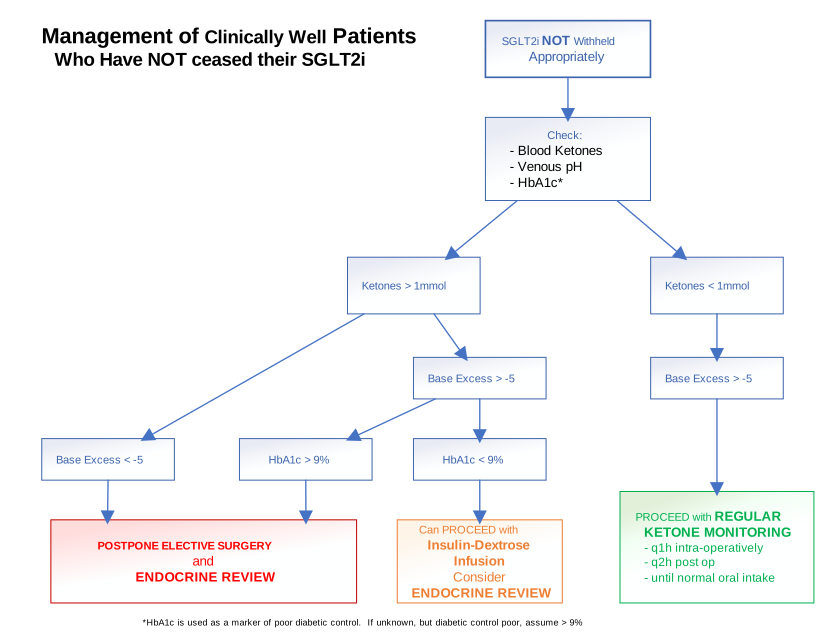
- BSL and ketones should be checked on admission
- Ketones > 1mmol/L should have an urgent VBG to measure base excess
- euDKR is diagnosed if base excess is < -5mol and ketones > 1mmol/L
| Ketones | Base Excess | Comments |
| <1 | > -5 |
No Ketosis and No Metabolic Acidosis • Hourly monitoring of blood ketones during the procedure and 2 hourly following the procedure until eating and drinking normal or discharged. • Where blood gas analysis is not available proceed only if added risk is consistent with goals of care. • More extensive surgery: Consider goals of care and collaboration with endocrinology and critical care. • Perioperative insulin and glucose infusion may reduce risk. |
| >1 | > -5 |
Ketosis Without Metabolic Acidosis • Seek endocrinology or general medicine advice. Ketosis without acidosis may reflect starvation, particularly individuals with HbA1c < 9% (< 75mmol/mol). • Consider proceeding, but with perioperative insulin and glucose infusion to reduce risk of ketoacicosis. |
| < -5 |
Ketosis With Metabolic Acidosis • Postpone non-urgent surgery. • Escalate care with Endocrinology and Critical Care. • URGENT surgery to proceed with insulin and glucose infusion and ketone monitoring with guidance from endocrinology and/or critical care. |
|
|
|
||
Perioperative GLP-1 Analogue Management
Perioperative GLP-1 Analogue Management3
| Time Until Procedure | Allowed Oral Intake |
| Minimum 24 hours before procedure |
Clear Fluids Only. |
| 6 hours before procedure | Water only. Up to 125ml/hr |
| 2 hours before procedure | Nil by Mouth |
Bedside gastric ultrasound and IV erythromycin may have a role as outline below.

Clinical Practice Recommendations regarding patients taking GLP-1 receptor agonists and dual GLP-1/GIP receptor co-agonists prior to anaesthesia or sedation for surgical and endoscopic procedures (April 2025) Source
General Intraoperative Glycaemic Management
Pre-Operative
- Monitor BSL hourly when fasting
- Treat hypoglycaemia and hyperglycaemia as per below
Intra-Operative
- Monitor BSL hourly
- Consider treating hyperglycaemia when BSL > 10mmol/L with subcutaneous insulin
- Consider commencing variable rate insulin infusion (VRII) when BSL > 12mmol/L
- Blood gas and ketones should be measured when BSL > 15mmol/L to check for ketoacidosis
- Isotonic solutions: 0.9% saline, Hartmanns, Plasmalyte can be used for hydration
- Glucose containing solutions should only be used for the treatment of hypoglycaemia or when using an insulin infusion.
- Dexamethasone: where possible it is recommended to use other antiemetics due to glucocorticoid induced hyperglycaemia.

Post-Operative
- If BSL has been stable, monitoring can be decreased to Q2H for type 1 diabetics, and Q2-4H for type 2 diabetics.
- Exceptions:
- Metformin: Patents with CKD 3B / eGFR < 45: recommence when renal functon returned to baseline.
- SGLT2i
- Major surgery: Withhold for at least 2 days
- Minor surgery: Recommence day after surgery
- Should only be recommenced once eating full diet.
Hyperglycaemia and Hypoglycaemia Management
Hyperglycaemia Management
- Hyperglycaemia should be treated when BSL >12mmol/L
- Repeat correctional insulin should not usually be administered within 3 hours of each other.
- E.g. if a patient is on a total of 50 units of insulin per day the ISF = 2, ie, One unit of insulin is anticipated to lower the BSL by 2mmol/L.
Type I Diabetes
- Determine correctional insulin doses based on patients’ usual insulin sensitvity factor (ISF)
- ISF is an approximate amount by which 1 unit of insulin will lower the BSL (in mmol/L)
- Estimating initial ISF for insulin treated patients: ISF = 100/ total daily insulin dose.
- E.g. if a patient is on a total of 50 units of insulin per day the ISF = 2, ie, One unit of insulin is anticipated to lower the BSL by 2mmol/L.
Insulin Correction Dose
Insulin Sensitivity ≈ 100 ⁄ TDD
In the absence of known TDD, a rough estimate of TDD can be made from:
TDD ≈ Body Weight (kg) x 1 ⁄ 2
Be conscious of risk of ‘insulin stacking‘. A single rapid acting insulin dose may last 3-5 hours, and repeat insulin doses in that interval may risk over correction.
Type II and Other Forms of Diabetes
- If >100kg, give 6 units Q3hr until BSL < 12mmol/L
- If 55-100kg, give 4 units Q3hr until BSL < 12mmol/L
- If < 55kg, give 2 units Q4hr until BSL <12mmol/L
Hypoglycaemia Management
- BSL < 4.0mmol/L should be avoided
- Treatment to avoid hypoglycaemia should begin when BSL < 5.0mmol/L
- BSL targets:
- General: 5-10 mmol/L
- Pregnancy: 5.0 ± 1.0 mmol/L
- Emergency surgery with poor glycaemic control: 10.0 ± 2.5 mmol/L
- Known hypoglycaemia unawareness: 10.0 ± 2.5 mmol/L
- Treatment of hypoglycaemia
- If >2 hours prior to surgery: clear apple juice
- If < 2 hours prior to surgery: 25-50ml 50% glucose

References
- ADS-ANZCA Perioperative Diabetes and Hyperglycaemia Guidelines (Adult) - November 2022
- Periprocedural Diabetic Ketoacidosis (DKA) with SGLT2 Inhibitor Use in People with Diabetes. ALERT UPDATE JULY 2022. ADS / ANZCA
- Clinical Practice Recommendations regarding patients taking GLP-1 receptor agonists and dual GLP-1/GIP receptor co-agonists prior to anaesthesia or sedation for surgical and endoscopic procedures - ADS / ANZCA
- Diabetes Management Including Hypoglycaemia, IV Insulin Infusions and Insulin Pumps (Adults only)
- Perioperative Management of the Surgical Patient with Diabetes – Anaesthesia 2015
- AAGBI - Peri‐operative management of the surgical patient with diabetes - Anaesthesia 2015
- Management of diabetes and hyperglycaemia in the hospital - Lancet Diabetes Educational 2021
- NHS - Peri-Operative Management of Diabetes in Adults - 2018
- Perioperative Hyperglycemia Management - An Update - Anesthesiology 2017